
 Skip to content
 More than 3000 square meters of warehouse, with a large stock
Light weight, small size, easy to air delivery
Injection molding department and machining department
24/7 one-on-one engineer service support
| Material | Typical Usage Environment | Advantages | Disadvantages |
|---|---|---|---|
| PU Rubber Roller | Medium to high-speed applications, textile machines, conveyor systems, drive rollers | - Excellent abrasion resistance - High mechanical strength - Good oil and chemical resistance - Wide hardness range | - Limited UV and heat resistance - May degrade in humid environments |
| NBR Rubber Roller | Oily, greasy, or industrial environments, feeding and drive rollers | - Outstanding oil and fuel resistance - Good wear and tear resistance - Affordable | - Poor ozone and UV resistance - Less flexible at low temperatures |
| Teflon (PTFE) Rubber Roller | High-temperature, chemical, or anti-stick environments, sealing or laminating rollers | - Excellent chemical resistance - Non-stick, low-friction surface - High heat resistance (up to 260°C) | - Poor mechanical strength - Low abrasion resistance - Difficult to bond, expensive |
| PVC Rubber Roller | Light-duty, indoor use, packaging and light material handling | - Cost-effective - Flame retardant - Resistant to acids and bases | - Limited heat and UV resistance - Can become brittle with age |
| EPDM Rubber Roller | Outdoor, humid, or ozone-exposed environments, chemical processing rollers | - Excellent weather, ozone, and UV resistance - Good heat resistance - Flexible in cold conditions | - Poor oil and fuel resistance - Moderate mechanical strength |
| Silicone Rubber Roller | High-temperature, food-grade, or non-stick environments, printing and heat-setting rollers | - Wide temperature range (-60°C to +230°C) - FDA food-safe options - Excellent UV and thermal resistance - Soft, non-damaging to delicate surfaces | - Low tear and abrasion resistance - Higher cost - Lower load capacity |
The above comparison table of rubber roller materials is only based on the properties of each material. If you have specific material requirements, you can tell us directly. But if you are not clear about the required materials, please contact us at any time. We will provide the most professional recommendations based on the environmental requirements you are using.
Please feel free to contact us, we will give you the most professional solution.
Rubber roller is essential components used across various industrial applications, including textile manufacturing, printing, packaging, electronics, and material handling. These rollers consist of a metal core—typically steel or aluminum—covered with a layer of synthetic or natural rubber. The rubber coating enhances the roller’s functionality by providing improved grip, cushioning, chemical resistance, or thermal insulation, depending on the specific material used.
Common rubber materials for roller coatings include Polyurethane (PU), Nitrile Rubber (NBR), Silicone, EPDM, Teflon (PTFE), and PVC. Each material offers distinct advantages. For example, PU is highly wear-resistant and suitable for high-load applications, while Silicone can withstand extreme temperatures and is often used in cleanroom or food-grade environments. NBR provides excellent oil resistance, making it ideal for oily or lubricated processes. Teflon is preferred in high-temperature or chemical-intensive environments due to its non-stick and chemical-resistant properties.

Conveyor rubber roller is essential components in material handling systems, designed to provide enhanced grip, reduce noise, and protect conveyed products from damage. By coating a metal roller core with materials such as polyurethane, nitrile rubber, or silicone, these rollers offer improved traction, wear resistance, and shock absorption. They are widely used in industries like logistics, packaging, food processing, and manufacturing, where consistent and safe movement of goods is critical. Rubber-coated rollers help extend equipment life and ensure smooth, efficient conveyor operation.

Printing Roller is essential in printing equipment, where they ensure precise ink transfer, paper feeding, and pressure control. These rollers typically feature a metal core with a rubber or elastomer layer such as polyurethane, nitrile (NBR), or EPDM, depending on the printing process. The rubber coating provides excellent grip, consistent pressure distribution, and resistance to ink, solvents, and wear. In high-speed printing, the rollers help maintain registration accuracy and minimize slippage or smudging. Their durability and smooth surface also protect delicate paper or film materials from damage, ensuring high-quality output and efficient production.

Textile Roller is specialized components used in spinning, weaving, dyeing, and finishing processes. These rollers are coated with materials such as natural rubber, polyurethane, nitrile rubber, or silicone to provide the right balance of grip, softness, and resistance to chemicals or heat. They help control fabric tension, guide threads or yarns, and protect delicate textile surfaces from damage. Rubber-coated rollers play a key role in ensuring smooth, precise, and high-speed textile production, while reducing material slippage, wear, and static buildup.

Anti-static Roller is specially designed to prevent the buildup of static electricity during high-speed or friction-intensive operations. These rollers feature conductive or static-dissipative rubber materials—such as anti-static polyurethane or carbon-loaded rubber—that safely discharge static charges, protecting sensitive materials and electronic components. Commonly used in electronics manufacturing, cleanrooms, printing, and textile industries, anti-static rollers help reduce dust attraction, prevent sparks, and improve product quality and operational safety.

Dusting Roller is specialized rollers designed to remove dust, lint, and microscopic particles from surfaces during industrial processes. They are commonly used in cleanroom environments, electronics manufacturing, printing, optics, and textile production to maintain product cleanliness and reduce contamination. These rollers feature a soft, adhesive rubber surface—typically made of silicone, polyurethane, or anti-static compounds—that gently lifts and traps unwanted debris without damaging delicate materials. Reusable or disposable options are available, and some rollers are designed for manual use, while others are integrated into automated systems. Tacky rollers play a vital role in ensuring surface quality and improving overall production efficiency.
102, No.14-1 Jixiang 3rd Road, Yixin Community, Longgang District, Shenzhen, Guangdong Province, China.
+ 86 181 8840 4906
eternal02023@gmail.com
We’re professional manufacturer of PCB equipment and consumable. We can give you the best advice for your requirements.
© All Rights Reserved.
WhatsApp us
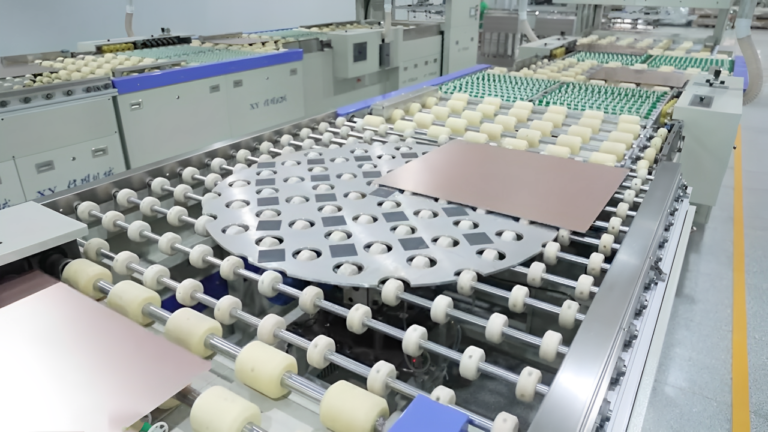
Eternal Tech is committed to becoming an expert in PCB conveying systems.
 Optimized by Seraphinite Accelerator