 Skip to content
 More than 3000 square meters of warehouse, with a large stock
Light weight, small size, easy to air delivery
Injection molding department and machining department
24/7 one-on-one engineer service support
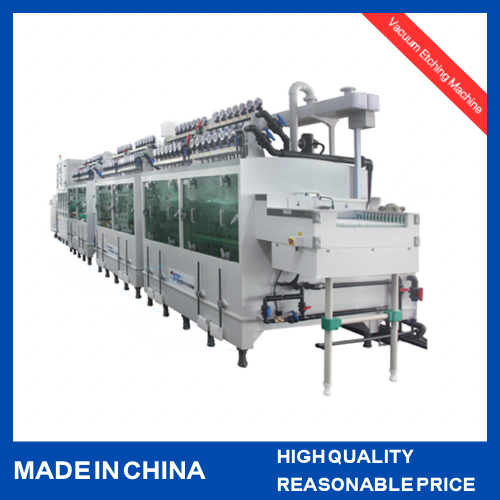
PCB vacuum etching machine is a device used in the production of printed circuit boards (PCBs) to etch the copper layer on the board. The process involves using a vacuum system to hold the PCB in place while etching chemicals are applied to selectively remove unwanted copper. This creates the electrical pathways needed for the PCB’s functionality.
Vacuum Chamber: The core of the equipment where the etching process occurs. The chamber is designed to maintain a vacuum environment, which improves the uniformity and efficiency of the vacuum etching process.
Vacuum Etching Solution Delivery System: A precise system for controlling the flow of etching chemicals to ensure accurate and uniform removal of the copper layer.
Vacuum Etching Machine Pump: Ensures the proper vacuum is maintained inside the etching chamber, which reduces the possibility of contamination and allows for cleaner etching results.
Temperature and Pressure Control Systems: These systems regulate the temperature and pressure inside the vacuum chamber to optimize the etching process and prevent over-etching or under-etching of the copper layers.
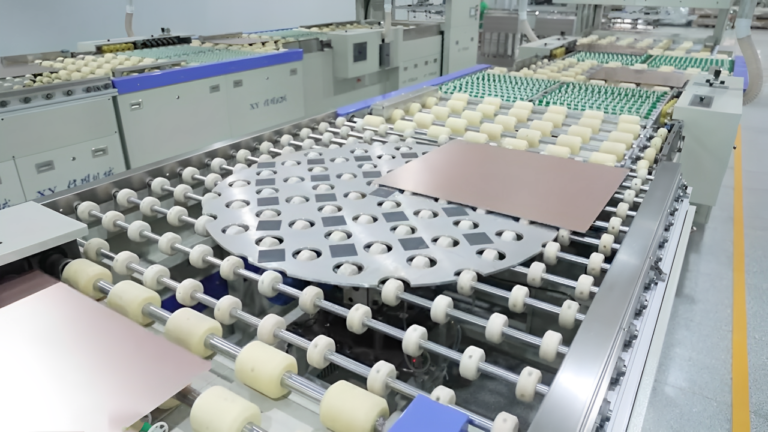
Vacuum Etching Machine Conveyor System: In larger machines, a conveyor system may be used to move the PCB through different stages of the etching process automatically.
Etching Solution Recycling System: This system helps recover and reuse etching chemicals, reducing waste and improving cost efficiency.
Control Panel: The user interface for operators to set and monitor various parameters such as etching speed, chemical concentration, and temperature.
Preparation: The PCB is first coated with a photoresist layer, which is then exposed to UV light to create the desired circuit pattern.
Exposure to Etching Solution: The PCB is then placed into the vacuum etching chamber, and the etching solution is applied. The vacuum process helps maintain consistent chemical interaction with the PCB surface.
Vacuum Etching Action: The etching solution reacts with the copper, dissolving away the exposed areas, leaving behind the protected circuit pattern.
Rinsing and Drying: After vacuum etching, the board is rinsed to remove residual chemicals and dried for further processing.
This can occur due to non-uniform exposure of the PCB to the etching solution or inconsistent vacuum pressure.
Solution: Ensure that the vacuum pressure is stable and uniform. Regularly check the spray nozzle for blockages and ensure the etching solution is well-mixed and at the correct concentration.
Over-etching happens when the etching process continues for too long, while under-etching occurs when the process is too short.
Solution: Adjust the etching time based on the thickness of the copper layer. Monitor the etching process closely, and use precise timers to ensure consistent results.
Residue from previous etching processes or contaminants can accumulate in the vacuum chamber.
Solution: Regularly clean the vacuum chamber to remove residues and dirt. Ensure that no dust or particles are present before starting a new batch.
Air leaks in the vacuum system can lead to poor etching results or inconsistent pressure.
Solution: Inspect the vacuum seals, hoses, and connections for any damage or wear. Replace any worn-out seals and ensure that the vacuum system is airtight.
The etching solution can degrade over time, leading to ineffective etching.
Solution: Regularly replace or refresh the etching solution to ensure it remains effective. Also, maintain proper storage conditions to prolong the solution’s lifespan.
Mechanical damage to the PCB or improper handling during the etching process can cause issues.
Solution: Use the appropriate holding fixtures to secure the PCB during etching and avoid excessive agitation or force. Ensure the PCB is properly aligned and free from defects before starting the process.
Inconsistent etching depth can be caused by variations in the vacuum chamber or non-uniform exposure to the etching solution.
Solution: Regularly calibrate the equipment and check the uniformity of the vacuum pressure. Also, ensure that the temperature and chemical concentration are consistent.
Contaminants or impurities in the etching solution can cause uneven or incomplete etching.
Solution: Filter the etching solution regularly to remove contaminants. Ensure that only high-quality chemicals are used, and check for any foreign materials that may have entered the solution.

Etching Quality
Vacuum Precision: The equipment should provide high precision in etching to ensure the fine features and detailed patterns of the PCB are accurately reproduced.
Consistency: Look for equipment that delivers consistent results across multiple boards, reducing the chance of defects and variation between batches.
Capacity and Size
Board Size Compatibility: Ensure the equipment can accommodate the largest PCB size you plan to process. Different models support different board dimensions, so match the machine to your production requirements.
Production Speed: Consider the etching speed of the equipment. Higher speeds can improve throughput, but make sure speed does not come at the cost of etching quality.
Vacuum Etching System Efficiency
Vacuum Strength: A strong vacuum system ensures better removal of the etching solution and efficient chemical use, which is crucial for high-quality etching.
Vacuum Consistency: A reliable vacuum system will help maintain stable etching conditions, preventing undercutting or other defects.
Chemical Handling and Safety
Chemical Efficiency: The system should be designed to handle etching chemicals efficiently and safely, minimizing waste and reducing operational costs.
Safety Features: Look for equipment with built-in safety features such as leak detection, proper ventilation, and robust waste management systems to ensure a safe working environment.
Ease of Operation
User Interface: The equipment should have an intuitive interface for easy setup and operation, especially if it will be used by operators with varying levels of experience.
Automation: Many modern etching systems are automated. The more automation they provide (such as automated loading/unloading, chemical replenishment, etc.), the less manual intervention is needed, which can reduce labor costs and improve efficiency.
Maintenance and Durability of Vacuum Etching Machine
Low Maintenance Requirements: Choose equipment that is easy to maintain, with readily available spare parts and support. This reduces downtime and repair costs.
Durability and Longevity: Consider the build quality and material durability. Equipment built with high-quality components can last longer, saving you money in the long run.
Cost Considerations
Initial Investment vs. Operational Costs: Consider both the initial cost of purchasing the equipment and the long-term operational costs, including chemical usage, power consumption, and maintenance.
ROI (Return on Investment): Analyze the potential for increased production efficiency and reduced defect rates to determine how quickly the equipment will pay for itself.
Environmental Impact
Waste Management: Choose equipment that minimizes waste and has good filtration or recycling systems for chemical disposal.
Energy Efficiency: Energy-efficient systems help reduce operating costs and are better for the environment.
Support and Warranty
Customer Support: Ensure the manufacturer provides reliable customer support, including training, troubleshooting, and quick response to inquiries.
Warranty and Service: A strong warranty and maintenance plan can help mitigate unexpected repair costs and equipment failure.
Technological Advancements
New Features: Consider modern equipment that includes advanced features such as laser etching, high-precision controls, and smart monitoring for better process management.
Software Integration: Some systems offer software integration that allows for real-time monitoring and process adjustments, which can improve efficiency and accuracy.
102, No.14-1 Jixiang 3rd Road, Yixin Community, Longgang District, Shenzhen, Guangdong Province, China.
+ 86 181 8840 4906
eternal02023@gmail.com
We’re professional manufacturer of PCB equipment and consumable. We can give you the best advice for your requirements.
© All Rights Reserved.
WhatsApp us
Eternal Tech is committed to becoming an expert in PCB conveying systems.
 Optimized by Seraphinite Accelerator