
 Skip to content
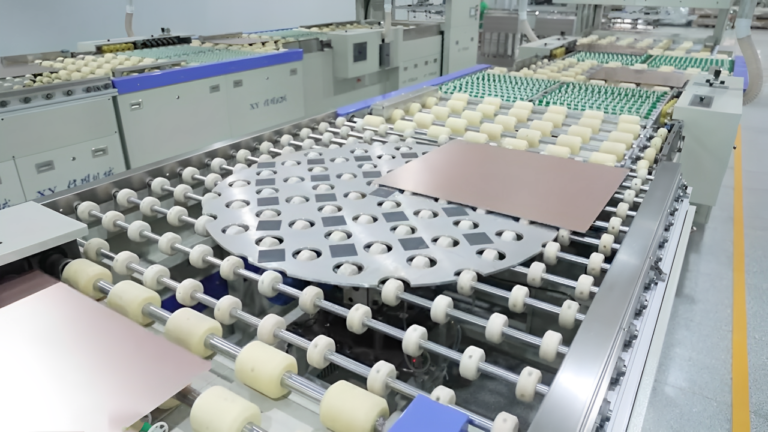
 A dusting roller is a specialized roller designed to remove dust, fine particles, fibers, or surface debris from materials during manufacturing or processing. It is commonly used in industries such as electronics, printing, film production, automotive, textiles, and cleanroom environments where surface cleanliness is critical. Dusting rollers are made from various materials like PU, silicone, EPDM, or adhesive-coated rubber and are designed to trap or pick up contaminants as materials pass through.
Dusting roller is widely used in industries where surface contamination can negatively impact quality, performance, or aesthetic appearance. Common applications include:
PCB (Printed Circuit Board) manufacturing – removing dust before photoresist coating or lamination.
Film and optical sheet production – ensuring clarity and uniformity by removing particles.
Printing industry – cleaning paper or plastic substrates before printing.
Automotive interior/exterior components – preparing parts before painting or coating.
Textile manufacturing – removing lint or fibers from fabrics.
Medical or cleanroom environments – ensuring contamination control on production lines.
Dusting roller function by using physical contact with a material surface to collect or absorb loose contaminants. Depending on the type, the mechanism can be:
Adhesive-based: A tacky or sticky surface picks up particles upon contact.
Electrostatic neutralizing: Some rollers have anti-static properties to prevent dust attraction.
Mechanical brushing: A brush-like or foamed surface agitates and lifts debris.
Once the roller surface becomes saturated with dust, it may be cleaned or replaced, depending on the roller type.
The maintenance cycle depends on the roller material, application environment, and production volume:
Adhesive rollers: Replace sticky sheets or clean the roller when dust buildup reduces effectiveness.
Silicone/PU rollers: Can be washed and reused. Clean with water or mild solvents regularly (e.g., after every shift or day).
Foam rollers: Replace periodically when the material deteriorates or loses flexibility.
Regular inspection is recommended to avoid contamination during production.
Most dusting roller is designed to be gentle and non-abrasive. However, surface compatibility depends on:
Roller hardness: Softer rollers (e.g., silicone) are ideal for delicate surfaces like optical film or glass.
Adhesive strength: Low-tack adhesives are better for sensitive or coated surfaces.
Pressure applied: Ensure even and light pressure to avoid surface damage.
Always test the roller on a sample or inconspicuous area before full-scale use.
Dusting roller is available in a range of sizes and formats to suit different equipment or manual operations:
Manual hand rollers: Typically 10–30 cm in width, ideal for manual cleaning tasks.
Machine rollers: Custom sizes, often integrated into conveyor lines or automatic cleaning systems.
Core diameter: Varies by machine – commonly 25mm, 38mm, or 76mm inner diameters.
Custom designs can be manufactured for OEM systems or specialized applications.
Yes, many dusting roller is suitable for Class 100 to Class 10000 cleanrooms, depending on the material and manufacturing process. Silicone and PU rollers are often preferred for cleanroom use due to:
Low particle generation
Non-shedding surface
Resistance to solvents and disinfectants
Electrostatic discharge (ESD) options available
Make sure the roller is ISO-certified or validated for cleanroom compatibility.
Consider the following factors:
Surface type and sensitivity
Level and type of contamination
Production speed and automation
Roller material compatibility
Environment (e.g., cleanroom, high temp, ESD-sensitive)
Consult your equipment manufacturer or a roller supplier for tailored recommendations.

We’re professional manufacturer of PCB equipment and consumable. We can give you the best advice for your requirements.
© All Rights Reserved.
WhatsApp us
Eternal Tech is committed to becoming an expert in PCB conveying systems.
 Optimized by Seraphinite Accelerator
