
 Skip to content
 As an important part in industrial production and logistics transportation, the selection of rubber roller is directly related to the operating efficiency and service life of the equipment. Therefore, the correct selection of the appropriate rubber roller is particularly important. This article will from the conveyor roller material, size, load capacity, use environment and maintenance aspects, how to correctly select the appropriate rubber roller.
There are a variety of materials of rubber roller, common rollers have silicone roller, PU roller, nylon roller and so on. Rollers of different materials have different characteristics and are suitable for different working environments. For example, the rubber roller has good elasticity and wear resistance, which is suitable for light load and low speed occasions. The polyurethane roller has high strength and wear resistance, which is suitable for heavy load and high speed occasions. Nylon rollers have excellent corrosion resistance and are suitable for wet or corrosive environments. Therefore, when selecting the rubber roller, it is necessary to choose the appropriate material according to the actual working environment and needs.
The size specifications of the coated roller include diameter, length and shaft diameter. The selection of these sizes should be determined according to the specific requirements and conditions of use of the equipment. For example, on the conveying line, the diameter and length of the roller should be selected according to the size and weight of the conveying item to ensure that the item can smoothly pass through the roller; In mechanical equipment, the shaft diameter of the roller should be determined according to the installation space and load requirements of the equipment. Therefore, when selecting the rubber roller, it is necessary to carefully measure and calculate the relevant size to ensure that the selected roller matches the equipment.
The load capacity of the roller is the maximum weight it can bear. When selecting rollers, the required load capacity needs to be determined according to the load in the actual application. If the load is too heavy, the roller may be deformed or damaged, affecting the normal operation of the device. Therefore, when selecting the roller, the load factor should be fully considered, and the roller with sufficient load capacity should be selected.
The use of the environment is also an important factor to consider when choosing a rubber roller. Different working environments have different requirements for rollers. For example, in high temperature environments, high temperature resistant roller materials should be selected; In humid or corrosive environments, corrosion resistant roller materials should be selected. In addition, it is also necessary to consider the impact of dust, oil and other factors on the roller in the working environment. Therefore, when selecting rollers, it is necessary to fully understand the characteristics of the working environment and choose rollers that can adapt to these characteristics.
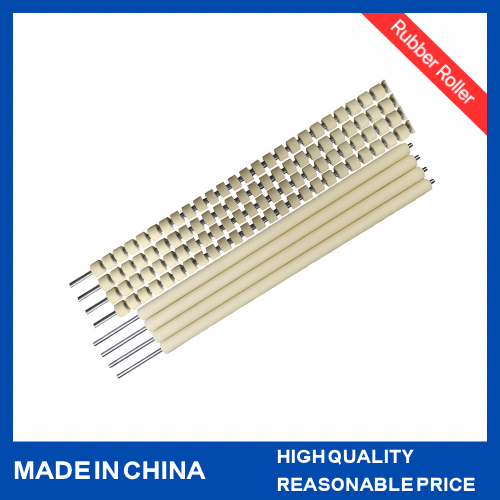
1.1 What is the rubber roller: The rubber roller refers to the roller covered with rubber material on the core material, which is a common accessory in rolling transmission.
1.2 Why use the coated roller: The coated roller has high hardness, excellent wear resistance, and still has high elasticity under high hardness, high surface finish, excellent grease resistance, and good chemical resistance. It can be used in harsh environment such as high and low temperature, dry and wet.
1.3. The main role of the rubber roller: it has a high environmental adaptability.
(1) Improve transportation efficiency.
(2) Shock absorption, protection products.
(3) Reduce noise.
(4) Reduce oil pollution.
(5) High environmental adaptability.
2.1 Bearing type:
Suitable for use in linear conveying movement
(Optional polyurethane, butadiene rubber, silicone rubber material)
2.2 Trough type:
Use with a belt for clamping or sliding
(Groove size can be customized according to different belt sizes)
2.3 Piping type:
Different length options can be used for rolling or conveying in equipment
2.4 Ring type:
Used with the matching shaft for fixed rotation conveying
2.5 Set screw type:
Use screws to fix the shaft
It can be used for clamping, extruding or pasting
(Optional high temperature (120℃) polyurethane material)
2.6 Threaded pass type:
Use screws to fix the shaft
Can be used for fixed rotary conveying
2.7 Keyway type:
Use keyway or add screws for fixing
Improved operating load and torque resistance
Suitable for high load conveying, guiding, rolling and so on
(Optional anti-static polyurethane material)
2.8 Ladder type:
Step + screw fixation design
Suitable for built-in baffles and can be used for longitudinal, transverse conveying or guiding roles
3.1 Made of polyurethane vinegar
(1) Excellent wear resistance
(2) Very high mechanical strength
(3) Good surface self-moistening
(4) High elastic protection coefficient
3.2 Silicone material
(1) Excellent low temperature resistance (-70℃)
(2) Excellent high temperature resistance (150℃)
(3) Good weather resistance
(4) Low wear resistance and mechanical strength
3.3 Ding Qing rubber material
(1) Excellent oil resistance
(2) Good wear resistance
(3) Limited ability to chemical corrosion and acid and alkali resistance
(4) Poor temperature resistance (high temperature 80℃, low temperature -10℃)
3.4 Hyparon material
(1) Excellent ozone resistance
(2) High weather resistance
(3) Good solvent resistance, acid and alkali resistance
(4) Poor tear resistance, mechanical strength is not high
3.5 EPDM material
(1) Strong corrosion resistance
(2) Strong chemical resistance
(3) Strong weather resistance
(4) Excellent hydrolysis resistance
(5) Limited tolerance to oils and fats
4.1 Working condition 1: high strength and high wear working condition
Choice: High wear-resistant A90 degree or 95 degree polyurethane (PU) rollers.
4.2 Working condition 2: harsh high temperature or low temperature conditions
Choice: silicone roller (can be used in -70℃~150℃).
4.3 Working condition 3: conditions with both temperature requirements and abrasion resistance
Choice: Heat resistant polyurethane (PU) roller (can be used at -20℃~120℃).
4.4 Working condition four: corrosive working condition
Option: EPDM (EPDM) roller.
4.5 Working condition five: wet and long-term contact with water conditions
Option: EPDM (EPDM) roller.
4.6 Working condition six: anti-static working condition requirements
Selection:
① < both anti-static and wear resistance required > Select anti-static polyurethane (PU) roller;
② < Permanent anti-static performance > Select silicone, rubber material anti-static roller.
4.7 Working condition 7: acid-alkaline, ozone working condition
Choice: Hyparon roller.
We’re professional manufacturer of PCB equipment and consumable. We can give you the best advice for your requirements.
© All Rights Reserved.
WhatsApp us
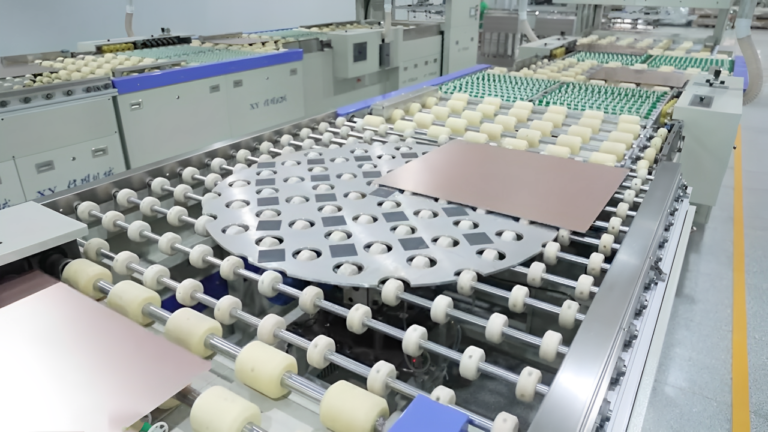
Eternal Tech is committed to becoming an expert in PCB conveying systems.
 Optimized by Seraphinite Accelerator